Key Takeaways
- A ground fault is a leakage of current from a live conductor to ground
- It commonly occurs due to damaged insulation, moisture, or wiring errors
- Even small leakage currents (5–30 mA) can cause serious injury
- GFCI and RCD devices detect imbalance and cut power instantly
- Ground faults are more dangerous in wet or outdoor environments
What is a Ground Fault?
A ground fault happens when electric current accidentally flows outside its intended path and takes a shortcut to the ground.
Instead of staying within wires or electrical devices, the current leaks into a grounded surface—like metal equipment, a wet floor, or even a person in contact with both a live wire and ground.

In a properly grounded system, the earth acts as a safety path for stray electricity. But when that current finds an unintended route to ground, it can cause serious hazards such as electric shock, equipment failure, or even fire.
What Causes a Ground Fault
Ground faults can occur in any electrical system—whether at home, in a commercial building, or in an industrial plant.
They usually happen when the insulation or wiring that keeps electricity contained breaks down, allowing current to escape toward the ground.
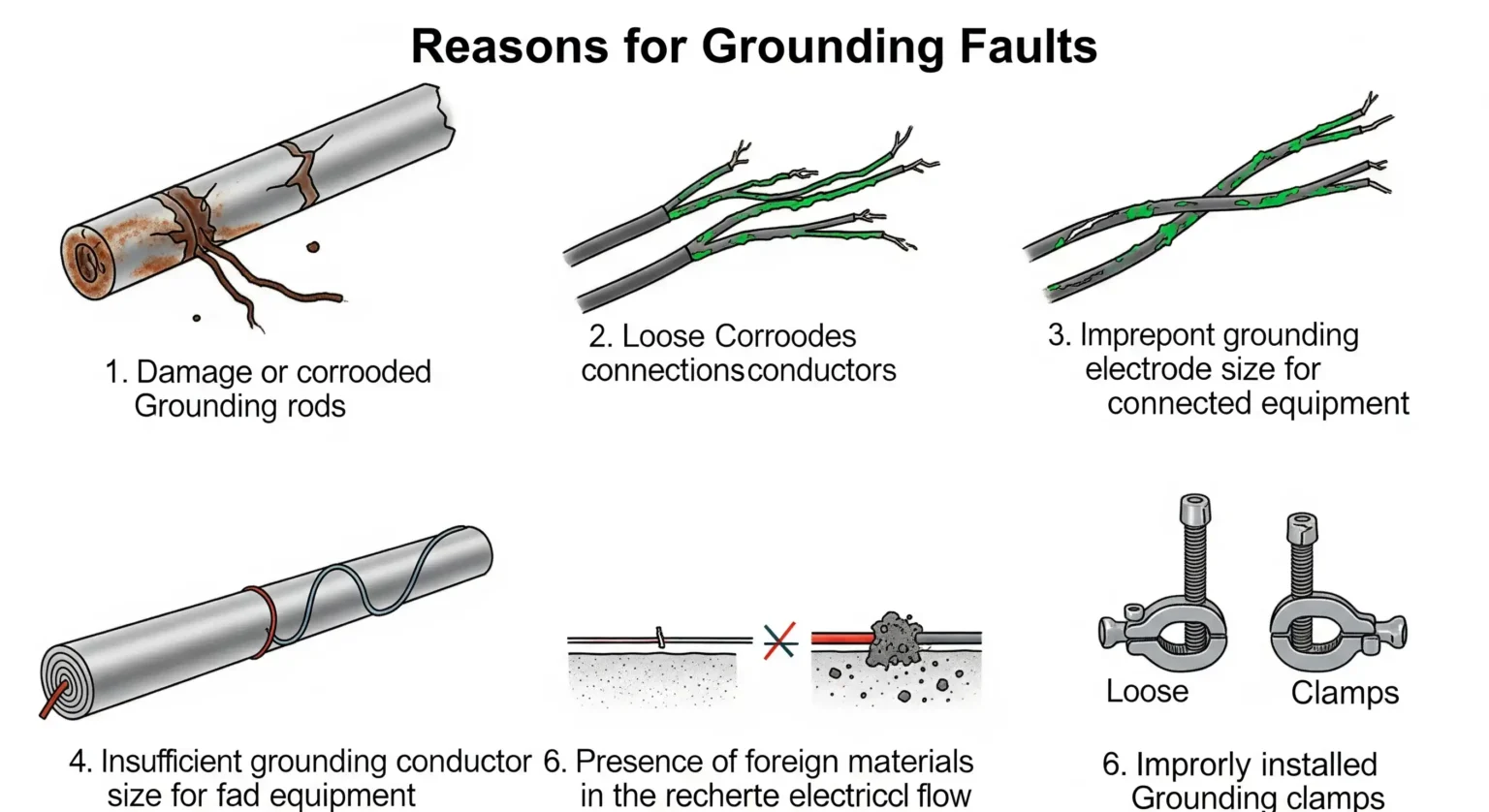
Damaged or Deteriorated Insulation
Over time, heat, vibration, or environmental stress can weaken wire insulation. Once cracks or gaps form, electricity can leak through exposed conductors and create an unintended path to ground.
This is one of the most common causes of ground faults in older installations or overloaded circuits.
Moisture and Water Contact
Water is a powerful conductor of electricity.
When electrical components are exposed to rain, humidity, or condensation, even a small amount of moisture can allow current to flow where it shouldn’t.
That’s why ground faults often occur in bathrooms, kitchens, garages, outdoor outlets, and construction sites.
Improper Grounding or Wiring Errors
Loose or missing ground connections, reversed polarity, or incorrect wire terminations can all lead to ground faults.
For example, a ground wire that isn’t properly bonded to equipment can cause voltage to appear on metal surfaces—creating shock hazards even under normal operating conditions.
Wear, Aging, and Physical Damage
Everyday wear and tear can compromise cables and devices. Rodents chewing on wires, nails or screws piercing walls, and vibration from machinery can all damage insulation and expose conductors.
Aging systems with brittle wires or corroded terminals are particularly prone to developing ground faults.
How Dangerous Is a Ground Fault?
A ground fault can become dangerous within milliseconds, especially when a person becomes part of the current path. Even small leakage currents can disrupt the human body’s electrical signals, leading to muscle paralysis or cardiac arrest. The risk increases significantly in wet environments, where resistance is lower and current flows more easily.
Dangers & Risks of a Ground Fault
Ground faults are among the most dangerous electrical problems because they can harm both people and equipment.
When electricity escapes its intended path, it can travel through metal parts, water, or even the human body—creating life-threatening situations within milliseconds.

Electric Shock and Electrocution
If a person touches a faulty appliance, damp surface, or metal casing energized by a ground fault, current may flow through their body to reach the ground.
According to the Occupational Safety and Health Administration (OSHA), even a current as low as 30 milliamps can cause muscle paralysis, respiratory failure, or cardiac arrest.
That’s why devices like Ground Fault Circuit Interrupters (GFCIs) are essential—they detect even tiny current imbalances and cut power instantly before a dangerous shock occurs.
Fire and Heat Hazards
When current takes an unintended path, it can generate excessive heat or electrical arcing, especially at the fault point or within insulation. These arcs can ignite nearby materials or melt wiring insulation, leading to electrical fires.
Faulty wiring in wet environments is particularly risky, as moisture accelerates corrosion and increases leakage current.
Equipment Damage and System Instability
Even if no visible fire or shock occurs, ground faults can silently degrade electrical systems over time:
Repeated faults can weaken insulation and shorten equipment lifespan.
Sensitive electronics may malfunction or fail due to irregular voltages.
Circuit breakers or GFCIs may trip unexpectedly, causing downtime or lost productivity.
How Ground Fault Protection Works
Ground fault protection is designed to detect dangerous current leaks before they cause harm.
The most common protective devices are GFCIs and Residual Current Devices (RCDs)—both serving the same purpose under different regional standards.

How GFCIs and RCDs Detect Faults
A GFCI or RCD constantly monitors the flow of current in a circuit’s hot (live) and neutral conductors. Under normal conditions, the current leaving the hot wire should equal the current returning through the neutral.
If even a small difference (as little as 4–6 milliamps) is detected, it means some current is leaking—possibly through a person or grounded object—and the device disconnects power within 1/40 of a second.
This fast, automatic cutoff greatly reduces the risk of electric shock or fire.
Typical Trip Thresholds and Response Speed
| Protection Device | Trip Sensitivity | Reaction Time | Common Use |
|---|---|---|---|
| GFCI (North America) | 5 mA | < 25 milliseconds | Residential and commercial circuits |
| RCD (Europe / IEC regions) | 30 mA (standard) or 10 mA (extra-sensitive) | < 30 milliseconds | General protection or medical/special areas |
These thresholds are deliberately set below the level that can cause harm to humans while remaining high enough to avoid nuisance tripping.
Where Ground Fault Protection Is Required or Recommended
Ground fault protection is most important in places where electricity and moisture can meet.
Codes and standards around the world typically require or strongly recommend GFCI/RCD installation in:
Bathrooms and kitchens
Outdoor outlets and garden lighting
Garages, basements, and crawl spaces
Laundry areas and utility sinks
Pool and spa equipment
Construction sites and portable tools
Identifying a Ground Fault: Signs & Testing
Ground faults can be obvious or hidden. In some cases, they cause sudden power loss or tripped breakers; in others, they create subtle electrical irregularities that go unnoticed for weeks. Knowing the warning signs and how to test safely helps prevent shocks, fires, and equipment damage.

Common Warning Signs of a Ground Fault
Watch for these typical symptoms in your home or workplace:
Frequent breaker or GFCI tripping: When a ground fault occurs, safety devices immediately shut off power to prevent harm.
Flickering or dimming lights: Indicates voltage fluctuation caused by current leakage.
Tingling sensation or mild shock: If you feel a buzz when touching an appliance, outlet, or metal fixture, there may be a grounding problem.
Burn marks or discoloration: Visible signs of heat or arcing around outlets, plugs, or panels.
Appliances malfunctioning after moisture exposure: Water intrusion in sockets or extension cords often leads to leakage current.
If any of these symptoms appear, disconnect the power source and investigate before continuing to use the equipment.
How to Test for a Ground Fault
For accurate diagnosis, use proper testing tools instead of guesswork:
| Tool | Purpose | How It Helps |
|---|---|---|
| Multimeter | Measures voltage, resistance, and continuity | Checks if a hot wire is unintentionally connected to ground |
| Ground-Continuity Tester | Verifies proper grounding path | Ensures the ground wire provides a safe fault path |
| GFCI/RCD Tester | Simulates a small leakage current | Confirms the device trips correctly within milliseconds |
| Ground Fault Locator | Pinpoints the fault location | Useful for complex or underground wiring systems |
Prevention & Safety Best Practices
Preventing ground faults requires more than just installing protective devices—it depends on proper wiring, regular maintenance, and smart daily habits.

Ensure Proper Grounding and Bonding
A safe electrical system starts with a solid ground:
Verify that every circuit, outlet, and metal enclosure is properly grounded and bonded.
Keep grounding connections tight, corrosion-free, and continuous to the main service panel.
Never use “cheater plugs” that bypass the grounding prong—this removes the safety path for fault current.
Install GFCI or RCD Protection in High-Risk Areas
GFCIs or RCDs are essential where moisture or outdoor exposure increases shock risk:
Install them in bathrooms, kitchens, basements, garages, outdoor outlets, and near pools.
Test each unit monthly using its built-in test button, and replace it if it fails to trip or reset.
Add new protection whenever circuits are added or remodeled in wet or outdoor areas.
Maintain and Inspect Wiring Regularly
Regular maintenance prevents most hidden ground faults.
Inspect cables for frayed insulation, loose connectors, or corrosion—especially in damp or high-vibration environments. Replace damaged cords immediately, and schedule professional checks for older or high-load installations.
Use Correct Wiring Methods and Certified Equipment
Always follow proper wiring practices and regional electrical standards such as NEC in North America or IEC in Europe and Asia.
Use certified components (UL, CE, or equivalent), match wire size to load requirements, and ensure enclosures are rated for the environment (e.g., NEMA or IP-rated for outdoor use).
In commercial and industrial systems, verify proper bonding between panels and equipment frames to maintain safe continuity.
Ground Fault vs Short Circuit: What’s the Difference?
Ground faults and short circuits are often confused, but they differ in how current flows and the type of risk they create. Understanding the difference helps you choose the right protection device.
| Feature | Ground Fault | Short Circuit |
|---|---|---|
| Current Path | Hot → Ground | Hot → Neutral / Another Hot |
| Typical Environment | Moist or outdoor areas | Any circuit with wiring faults |
| Main Danger | Electric shock, equipment leakage | Fire, wire damage, circuit overload |
| Detection Device | GFCI / RCD | Standard circuit breaker / fuse |
| Response Time | Milliseconds (life protection) | Instant breaker trip (equipment protection) |
Global & Code Considerations: Protection Standards Around the World
Ground fault protection is regulated differently across countries, but the goal is always the same — to prevent electrical shock and fire hazards.
Whether you’re designing a residential system or managing an industrial facility, understanding local standards ensures compliance, safety, and insurance validity.
North America
In the United States and Canada, ground fault protection is governed primarily by:
NEC (National Electrical Code, Article 210.8) — mandates GFCI protection in all wet or damp areas such as bathrooms, kitchens, garages, basements, outdoor outlets, and construction sites.
UL 943 — defines performance standards for Ground Fault Circuit Interrupters, including trip sensitivity (typically 5 mA) and test requirements.
CSA C22.2 — Canadian equivalent covering similar GFCI performance and installation standards.
Many U.S. states have also extended GFCI use to laundry areas, HVAC equipment, and pool systems, ensuring broader coverage in residential and commercial buildings.
Europe and the United Kingdom
Most European countries follow IEC (International Electrotechnical Commission) standards:
IEC 60364 — sets general electrical installation rules, including mandatory RCD use in final circuits up to 32 A.
EN 61008 / EN 61009 — define performance and testing for RCDs and RCBOs.
In the UK, the BS 7671 (IET Wiring Regulations) requires RCD protection for nearly all socket outlets and circuits in dwellings.
European systems often use 30 mA RCDs as standard for personal protection, with 100–300 mA devices used for fire prevention or equipment protection.
Asia-Pacific and Other Regions
Regulatory frameworks in Asia, Australia, and other regions typically align with IEC standards, though enforcement varies:
Australia / New Zealand (AS/NZS 3000) — RCDs required for all final subcircuits supplying socket outlets or lighting in residential and commercial buildings.
China (GB 16916 / GB 6829) — mandates leakage protection in public facilities, construction sites, and residential wet areas.
Japan (JIS C 8210) — similar to IEC 61008, emphasizing leakage circuit breakers (ELCBs) in homes and workplaces.
Developing countries are progressively adopting RCD-based safety requirements, especially in new urban and industrial projects.
Understanding ground faults is not just about theory—it directly impacts how you design, maintain, and protect electrical systems in real-world environments.
Conclusion
A ground fault is one of the most dangerous electrical faults because it can expose people directly to current flow. While often invisible, it can lead to shock, fire, or equipment failure if not properly controlled. Understanding its causes and installing protection devices like GFCIs or RCDs is essential for maintaining a safe electrical system in any environment.

 English
  Spanish
  Portuguese
  Arabic
  Japanese
  Korean
  Chinese
  French
  German
  Russian
  Thai
Thai