


What Is Electric Current?
Electric current is the flow of electric charge through a conductor, usually measured in amperes (amps). In everyday terms, it’s what allows electricity to move from a power source to a device and make that device work.
Electric current matters because it is the active part of electricity. Voltage provides the push, but current is the movement that delivers energy. Without current, lights would stay off, appliances wouldn’t run, and electronic devices couldn’t function.

You see electric current at work every day:
A lightbulb turns on when current flows through its filament or circuit.
A phone charger works because current moves from the outlet into the battery.
Home appliances like refrigerators and microwaves rely on controlled current to operate safely and efficiently.
Understanding what electric current is helps explain how electrical systems power modern life—and why controlling current is essential for safety and performance.
How Electric Current Works
Electric current doesn’t appear on its own—it flows because electric charges are pushed through a circuit.
Understanding the basics makes the idea much easier, even without a technical background.

Charge Carriers: What Actually Moves
In most electrical systems, the moving charges are electrons.
These tiny particles are already present inside metal conductors like copper wires.
In some cases—such as batteries, electrolytes, or certain industrial systems—ions (charged atoms) can also carry current.
The key idea is simple: current exists whenever charged particles move.
What Makes Current Flow: Voltage
Current needs a driving force, and that force is voltage.
You can think of voltage as electric pressure:
Higher voltage pushes charges harder
Lower voltage pushes them more gently
When there is enough voltage across a conductor, charges begin to move, and current flows.
Conventional Current vs. Electron Flow
There are two ways current is described:
Actual electron flow: electrons move from the negative side to the positive side of a circuit
Conventional current: current is shown flowing from positive to negative
Engineers and diagrams still use conventional current for consistency, even though electrons move the opposite way.
For everyday understanding, the difference doesn’t affect how circuits are designed or used.
Units & Measurement
To work safely and correctly with electricity, electric current must be measured and controlled.
That’s where standard units and simple tools come in.
Amperes (Amps): The Unit of Current
Electric current is measured in amperes, often shortened to amps (A).
1 ampere means one coulomb of electric charge flowing per second
In simple terms, amps tell you how much electricity is flowing
For everyday reference:
Small electronics use very small currents
Household circuits typically carry 15 or 20 amps
Industrial systems may handle much higher current levels
How Electric Current Is Measured
Current is measured using tools designed to safely detect flow:
Ammeter – a device specifically used to measure current in a circuit
Multimeter – a common tool that can measure current, voltage, and resistance
To measure current correctly, the meter is placed in series with the circuit, allowing the current to pass through the measuring device.
⚠️ Safety note: Measuring current incorrectly can damage equipment or cause injury. Always follow tool instructions and safety procedures.
Symbols and Notation
In electrical diagrams and formulas, electric current is represented by the symbol:
I = electric current (measured in amps)
You’ll often see this symbol used in circuit diagrams and equations, especially when discussing how current relates to voltage and resistance.
Types of Electric Current
Electric current is not the same in all systems.
The direction and behavior of the flow determine how electricity is generated, delivered, and used.
The two main types you’ll encounter are Direct Current (DC) and Alternating Current (AC).

Direct Current (DC)
Direct current (DC) flows in one constant direction.
Key characteristics:
Current moves steadily from negative to positive
Voltage stays at a fixed level
Common in low-voltage and electronic systems
Typical examples:
Batteries
Solar panels
Phones, laptops, and most electronic devices
DC is ideal for electronics because it provides stable and predictable power.
Alternating Current (AC)
Alternating current (AC) changes direction back and forth at a regular rate.
Key characteristics:
Direction reverses many times per second
Voltage rises and falls in a repeating pattern
Easy to transmit over long distances
Typical examples:
Household electrical outlets
Lighting systems
Large appliances
AC is used in homes and power grids because it can be efficiently stepped up or down using transformers.
Other Specialized Types of Current
You may also encounter these in specific applications:
Pulsating current – flows in bursts rather than smoothly
Signal current – carries information rather than power (used in communication and control systems)
These types are usually part of electronic or industrial systems rather than everyday household wiring.
Effects of Electric Current
When electric current flows, it doesn’t just move charges—it produces real, useful effects.
These effects are the reason electricity can heat homes, run motors, and power many industrial processes.
Heating Effect
When current passes through a conductor, part of the electrical energy is converted into heat.
What this looks like in real life:
Electric heaters and ovens produce heat on purpose
Lightbulbs warm up when they’re on
Wires can overheat if too much current flows
This effect is useful—but it’s also why overcurrent protection (like fuses and breakers) is essential for safety.
Magnetic Effect
Any electric current creates a magnetic field around the conductor.
Why this matters:
Electric motors use this effect to create motion
Transformers rely on magnetic fields to transfer energy
Relays and solenoids operate using magnetic attraction
Without the magnetic effect of current, modern machines and appliances wouldn’t work.
Chemical Effects
In some systems, electric current can cause chemical changes.
Common examples include:
Electrolysis (used in metal processing and chemical production)
Charging and discharging of batteries
These effects are more common in industrial and scientific applications, but they play a key role in energy storage and manufacturing.
Ohm’s Law & Current Relationships
To understand how electric current behaves in real circuits, engineers rely on a simple rule called Ohm’s Law.
It explains how voltage, current, and resistance work together.
Ohm’s Law (V = I × R)
Ohm’s Law states that:
Voltage (V) = Current (I) × Resistance (R)
In plain language:
Voltage is the push that drives electricity
Current is how much electricity flows
Resistance is how much the circuit resists that flow
If you know any two of these values, you can calculate the third.
How Resistance Affects Current
Resistance directly controls how much current flows through a circuit.
Higher resistance → lower current
Lower resistance → higher current
For example:
A thin wire has more resistance than a thick one
A long wire has more resistance than a short one
This is why wire size (gauge) and material matter in electrical installations.
Practical Implications for Devices and Wiring
Ohm’s Law helps explain many everyday electrical decisions:
Appliances are designed to draw a safe amount of current at a given voltage
Wiring must be sized correctly to handle expected current without overheating
Overloading a circuit increases current and can trip breakers or damage wires
Engineers use Ohm’s Law to ensure systems operate efficiently while staying within safe limits.
Examples of Electric Current in Real Life
Electric current isn’t just a theory—it’s working around you every day.
Seeing how current behaves in common situations makes the concept much easier to understand.
Electric Current in Homes (AC)
Most homes use alternating current (AC) supplied by the power grid.
How it’s used:
Wall outlets deliver AC power to appliances
Lights, refrigerators, air conditioners, and TVs all rely on AC
Circuit breakers control and limit current for safety
AC is ideal for homes because it can be transmitted efficiently and adapted to different voltage levels.
Battery-Powered Devices (DC)
Devices that run on batteries use direct current (DC).
Common examples:
Smartphones and laptops
Flashlights and remote controls
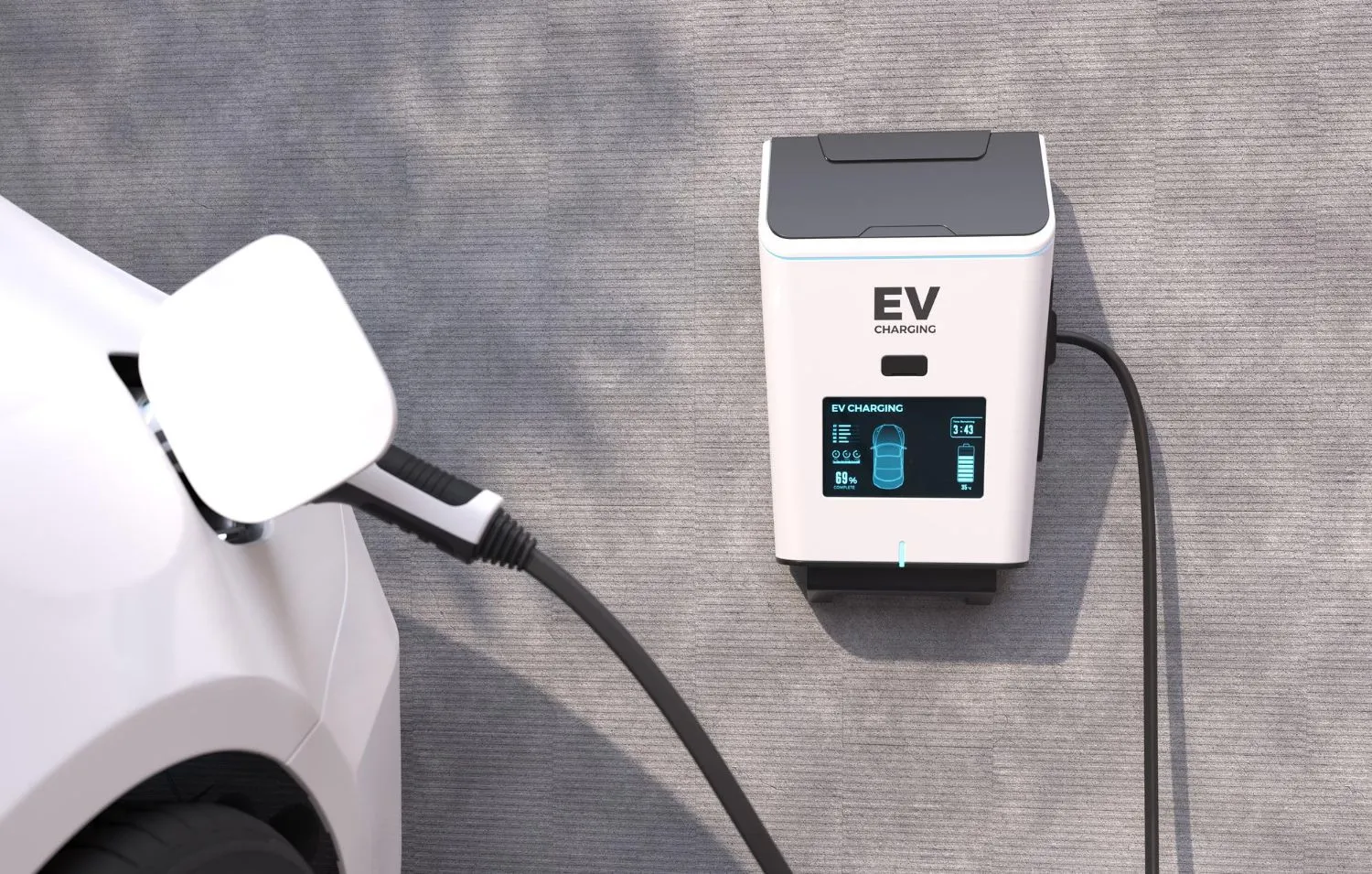
Electric vehicles (internally, many systems use DC)
Batteries provide a steady, one-directional current, which is well suited for electronics.
Charging vs. Powering Devices
Charging and powering aren’t always the same process.
Charging electronics:
AC from the outlet is converted into DC inside chargers to safely recharge batteries.Powering appliances:
Many appliances run directly on AC without storing energy, using current only while they’re operating.
Safety & Practical Tips
Electric current is useful—but too much current can be dangerous.
Understanding basic safety principles helps prevent overheating, equipment damage, and electric shock.
Why Excess Current Is Dangerous
When current exceeds safe levels, it can cause serious problems:
Overheating – Wires and components heat up, increasing fire risk
Electric shock – Higher current through the body can cause injury
Equipment damage – Devices may fail or wear out faster
This is why electrical systems are carefully designed to limit and control current.
Circuit Protection Basics
Electrical systems use protective devices to keep current within safe limits:
Fuses – Melt and break the circuit when current gets too high
Circuit breakers – Automatically switch off power during overloads or short circuits
These devices don’t prevent current—they stop dangerous current levels before damage occurs.
Tip: If a breaker trips often, it’s a warning sign—not a nuisance.
Checking Current Safely
Measuring current should always be done with caution.
Best practices:
Turn off power before connecting measuring tools
Use a multimeter or clamp meter designed for current measurement
Follow the tool’s instructions and safety ratings
Never measure current unless you understand the correct setup
If you’re unsure, it’s safer to consult a qualified electrician than risk injury.

 English
 Spanish
 Portuguese
 Arabic
 Japanese
 Korean
 Chinese
 French
 German
 Russian
 Thai




