


Switchgear is the equipment that protects and controls your power system. It includes devices like circuit breakers, switches, and fuses—all working together to safely manage electricity. Whether in a factory, data center, or power grid, switchgear helps turn power on or off, isolate faults, and prevent dangerous electrical events.
Why is it so important? Because power systems can be risky without the right protection. Switchgear keeps people and equipment safe. It improves reliability by quickly cutting off power when something goes wrong, and it helps operators control where and how electricity flows.
Core Components & Function
Switchgear is made up of different components that work together to control, protect, and isolate electrical circuits.

Key Components
Circuit Breakers: Automatically stop the flow of electricity during a fault (like a short circuit or overload).
Switches: Manually or automatically open and close electrical circuits.
Fuses: Sacrificial devices that “blow” when too much current flows, protecting the system.
Isolators (Disconnect Switches): Provide visible and safe separation for maintenance.
Protective Relays: Detect abnormal conditions and trigger breakers to respond.
Control & Monitoring Systems
Current Transformers (CTs) and Voltage Transformers (VTs): Measure current and voltage for monitoring and protection.
Protection Relays: Use CT/VT data to detect problems like overcurrent or ground faults.
Meters & Displays: Show real-time data on voltage, current, frequency, and more.

Core Functions
Control: Switchgear helps turn circuits on/off, manage power flow, and coordinate system behavior.
Protection: It detects faults and quickly isolates the problem to avoid damage or fire.
Isolation: Allows safe maintenance by disconnecting parts of the system.
Fault Clearing: Interrupts dangerous currents before they can cause harm.
Classification by Voltage Levels
Switchgear is grouped into three main categories based on voltage levels: Low Voltage (LV), Medium Voltage (MV), and High Voltage (HV). Each serves different needs, from home panels to massive utility grids.
1. Low-Voltage (LV) Switchgear

(Typically up to ~1 kV)
Where it’s used: Residential buildings, commercial spaces, light industrial applications.
Typical equipment: Molded case circuit breakers (MCCBs), air circuit breakers (ACBs), contactors.
Advantages: Safer to handle, easy to install, cost-effective for small-scale use.
Common applications: Lighting control, HVAC, office power distribution.
2. Medium-Voltage (MV) Switchgear

(Approx. 1 kV to 36 kV or 35 kV)
Where it’s used: Industrial facilities, wind farms, substations, hospitals, data centers.
Typical equipment: Vacuum circuit breakers (VCBs), gas-insulated switchgear (GIS), ring main units (RMUs).
Advantages: Better efficiency for larger loads, handles long-distance distribution within a facility.
Considerations: Requires trained personnel for operation and maintenance.
3. High-Voltage (HV) Switchgear

(Above 35 kV to 800+ kV)
Where it’s used: Utility transmission systems, large substations, power plants.
Typical equipment: SF₆ gas-insulated breakers, disconnect switches, surge arresters.
Advantages: Delivers power over long distances with minimal loss.
Challenges: Expensive, complex, and high-risk—requires strict safety protocols and regular inspections.
Types Based on Insulation & Construction
Not all switchgear is built the same. Depending on where it’s installed and how much space or environmental protection you need, the internal insulation method and enclosure style can vary widely.
Air-Insulated vs. Gas-Insulated Switchgear (AIS vs GIS)
Air-Insulated Switchgear (AIS)

What it is: Uses ambient air as the insulation medium.
Pros: Lower cost, easier to maintain, visually inspectable.
Cons: Larger footprint, not ideal for harsh or compact environments.
Use case: Ideal for indoor substations, factories, or open areas where space isn’t a constraint.
Gas-Insulated Switchgear (GIS)

What it is: Uses SF₆ (sulfur hexafluoride) gas to insulate components inside sealed metal enclosures.
Pros: Extremely compact, sealed against moisture and dust, low maintenance.
Cons: Higher cost, specialized handling required due to SF₆ gas.
Use case: Great for underground, offshore platforms, high-rise buildings, or polluted environments.
Metal-Clad vs. Metal-Enclosed vs. Compact vs. Pad-Mounted

Metal-Clad Switchgear
Features: Each component (breaker, bus, relays) is compartmentalized and isolated by grounded metal barriers.
Benefits: Maximum safety and fault containment; often used in medium-voltage applications.
Example Use: Industrial plants, hospitals.
Metal-Enclosed Switchgear
Features: Components are housed together in a shared enclosure without full isolation.
Benefits: More compact, lower cost than metal-clad; used in less critical environments.
Example Use: Commercial facilities, utility power distribution.
Compact Switchgear
Features: Smaller form factor, sometimes integrated into switchboard-style units.
Benefits: Saves space, especially in indoor commercial environments.
Example Use: Data centers, retail spaces.
Pad-Mounted Switchgear
Features: Enclosed in weatherproof housing for outdoor ground-level installation.
Benefits: Tamper-resistant, easy access for maintenance, no need for a separate substation building.
Example Use: Suburban utility distribution, campuses, large industrial sites.

Indoor vs Outdoor Installations
Indoor Switchgear: Designed for climate-controlled environments. Easier to access and maintain, but requires real estate and cooling control.
Outdoor Switchgear: Weatherproof, often with rugged enclosures. Ideal for substations, rural areas, or utility sites.
Standards & Ratings
To ensure safety, reliability, and compliance, all switchgear systems must meet strict electrical and mechanical standards. These standards define everything from how much current a switchgear can safely interrupt to how well it withstands environmental exposure.

Key Standards Organizations
IEEE (Institute of Electrical and Electronics Engineers): Develops U.S.-based technical standards for electrical systems, including switchgear operation and performance.
ANSI (American National Standards Institute): Coordinates voluntary standards, including ANSI C37 for switchgear.
IEC (International Electrotechnical Commission): Offers globally recognized standards, such as IEC 62271 for high-voltage switchgear.
Many manufacturers design their products to meet both ANSI/IEEE and IEC depending on the market (e.g., North America vs international).
Electrical Ratings
Interrupting Rating (AIC / kAIC):
This is the maximum fault current the switchgear can interrupt without failure.
Example: 50 kA @ 480V means it can safely stop a fault current of up to 50,000 amps at that voltage.
Short-Circuit Withstand Rating:
Specifies how much mechanical and thermal stress the unit can endure during a short circuit before breaking down.
Current Rating (Ampacity):
Defines the continuous load the switchgear can carry—commonly ranges from hundreds to thousands of amps, depending on the system level (LV/MV/HV).
Voltage Rating:
Indicates the maximum system voltage the gear is designed for—such as 600V for low-voltage or 15kV for medium-voltage systems.

Safety & Protection Standards
Arc Flash Containment:
Modern switchgear must be designed to contain and redirect energy from arc faults.
ANSI C37.20.7 is often referenced for arc-resistant designs.
Ingress Protection (IP) and NEMA Ratings:
IP Ratings (e.g., IP65, IP67) define protection against dust and water.
NEMA Ratings (e.g., NEMA 1, 3R, 4X) indicate suitability for different environments—indoor, outdoor, corrosive, etc.
Temperature Rise Standards:
These ensure components don’t overheat under full load, in line with UL or IEC guidelines.
Typical Applications & Use Cases
Switchgear isn’t just for power plants—it’s everywhere behind the scenes, quietly ensuring safe, reliable electricity.

1. Utility Substations & Power Grids
Use: Medium and high-voltage switchgear plays a core role in substations, managing power from generation to transmission and distribution lines.
Why it’s needed: It controls power flow, isolates faulty circuits, and protects critical infrastructure from overloads and faults.
Example: A 132 kV switchgear unit in a regional substation might isolate one transmission line while keeping others running during maintenance.
2. Industrial Facilities
Use: Factories and heavy industry often require medium-voltage switchgear to handle large motors, welders, and production lines.
Why it’s needed: These operations demand high reliability and protection from faults that could halt production or damage costly machinery.
Example: A steel plant may use metal-clad switchgear with draw-out breakers for frequent maintenance and high short-circuit ratings.

3. Data Centers
Use: LV and MV switchgear is used to distribute conditioned power to racks, UPS systems, and backup generators.
Why it’s needed: Uptime is critical. Switchgear enables rapid isolation of faults, redundant power paths, and safe maintenance.
Example: Tier 3+ data centers often deploy arc-resistant gear with remote racking and monitoring to meet uptime standards.
4. Hospitals & Critical Infrastructure
Use: Hospitals use switchgear for safe power distribution to ORs, ICUs, labs, and emergency systems.
Why it’s needed: Lives depend on reliable power. Backup generators and transfer switches often tie into the switchgear system.
Example: Automatic transfer switchgear ensures emergency power activates seamlessly during blackouts.
5. Large Commercial Buildings & Campuses
Use: Office parks, malls, and universities use switchgear to control multiple power zones and load centers.
Why it’s needed: It enables efficient distribution, demand balancing, and integration with energy monitoring systems.
Example: Switchboards and MV switchgear may control HVAC, elevators, lighting zones, and backup systems across buildings.

6. Renewable Energy Systems (Solar/Wind)
Use: Switchgear manages output from solar arrays or wind farms before feeding into the utility grid.
Why it’s needed: It provides voltage step-up, disconnects during faults, and handles bidirectional power flow.
Example: GIS (gas-insulated switchgear) is commonly used at wind farms due to its compact size and outdoor durability.
Advantages & Limitations of Switchgear
Understanding the pros and cons of switchgear helps designers, engineers, and operators make smarter, safer decisions for their power systems.

Advantages of Switchgear
1. Protection & Safety
Switchgear protects both equipment and personnel by automatically isolating faults, interrupting dangerous currents, and enabling safe maintenance through isolation devices like circuit breakers and disconnects.
2. Fault Clearing Capabilities
Modern switchgear can detect, interrupt, and isolate faults in milliseconds, preventing cascading failures or damage to downstream systems.
3. Load Management & Control
It allows you to manage and route power efficiently across different sections of a facility or grid. Load shedding, feeder control, and switching between power sources are all possible.
4. Operational Flexibility
With features like draw-out breakers, remote operation, and modular configurations, switchgear adapts to changing load needs and system expansions without major redesigns.
5. Compliance & Monitoring
Integrated protection relays and metering allow for real-time monitoring, fault diagnostics, and compliance with codes like IEC, IEEE, and ANSI.
Limitations of Switchgear
1. Higher Cost
Compared to simpler distribution systems, switchgear—especially medium and high-voltage types—comes with a higher upfront cost due to specialized components and insulation requirements.
2. Space Requirements
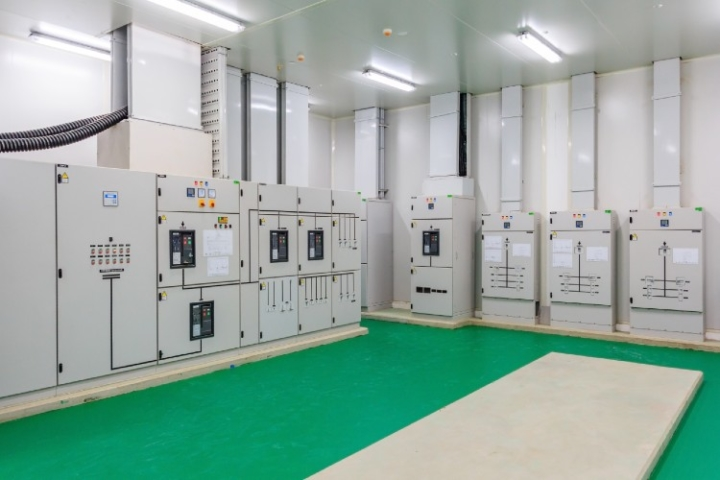
Switchgear can be bulky, requiring dedicated rooms with minimum clearances for access, cooling, and safety. Gas-insulated switchgear (GIS) reduces footprint but increases cost.
3. Maintenance Needs
Regular testing, cleaning, and part replacement (especially in air- or oil-insulated types) are essential to ensure long-term reliability—this increases operational workload and lifecycle cost.
4. Environmental Risks
Some switchgear types (like SF₆ gas-insulated units or oil-filled breakers) pose environmental challenges:
SF₆ gas is a potent greenhouse gas and must be handled carefully.
Oil insulation risks fire or leaks if not properly maintained.
5. Complexity for Small Installations
In small-scale or residential applications, switchgear may be overkill—simpler solutions like panelboards or load centers are more cost-effective and user-friendly.
Installation, Maintenance & Safety Tips
Switchgear is critical to keeping power systems safe and reliable—but only if it’s installed and maintained correctly.

Installation Best Practices
1. Ensure Proper Grounding
Every switchgear system must be grounded according to national standards (NEC, IEC) to prevent dangerous voltage buildup and ensure fault current flows safely.
2. Leveling & Alignment
Misaligned frames or uneven flooring can lead to internal stress and failure over time. Use precision leveling tools during installation to ensure a secure and aligned fit.
3. Secure Cable Terminations
Loose or poorly torqued connections are a common cause of heat buildup and faults. Always use a calibrated torque wrench and follow manufacturer guidelines.
4. Environmental Protection
Install switchgear in dry, ventilated areas free from dust and moisture—or use NEMA/IP-rated enclosures if outdoor or harsh-environment exposure is unavoidable.

Preventive Maintenance Tips
1. Routine Visual Inspection
Regularly check for dust accumulation, signs of corrosion, oil/gas leaks, loose fasteners, or discoloration (a sign of overheating).
2. Cleaning & Lubrication
Keep contact surfaces clean and apply lubricants to moving parts as needed to reduce friction and wear. Always de-energize before servicing.
3. Testing & Calibration
Periodically test protective relays, current transformers, and breakers. Ensure interrupting devices trip within safe time limits.
4. Scheduled Shutdowns
Plan annual maintenance windows to perform deeper inspections, insulation resistance testing, and component replacements without interrupting critical operations.
Operator Safety Essentials
1. Arc Flash Protection
Switchgear can release tremendous energy during faults. Use arc-rated PPE (Personal Protective Equipment), maintain proper working distances, and follow lockout/tagout (LOTO) protocols.
2. Remote Operation Options
For high-risk environments, choose switchgear with remote racking systems or monitoring interfaces to reduce operator exposure during switching operations.
3. Clear Labeling & Signage
All breakers, busbars, and access points should be clearly labeled to avoid accidental contact or confusion during maintenance.
Emerging Trends & Innovations
The world of switchgear is evolving fast. With the rise of smart grids, renewable energy, and compact infrastructure, switchgear technology is adapting to meet modern demands.

Smart & Digital Switchgear
Digital switchgear is bringing intelligence to traditional systems. By integrating:
IoT sensors
Real-time condition monitoring
Remote diagnostics
Digital protection relays
…operators can predict failures before they happen, optimize maintenance schedules, and reduce unplanned downtime. This helps facilities move from reactive to proactive power management, improving reliability and reducing costs.
Greener Insulating Mediums
One growing concern in switchgear design is the environmental impact of SF₆ gas, a powerful greenhouse gas traditionally used for insulation in high-voltage switchgear. Innovations now include:
Vacuum interrupters for clean switching
Fluoroketone (FK) or fluoronitrile alternatives
Gas-free solid-dielectric or air-insulated systems
These options reduce environmental risks while maintaining performance and safety—helping companies align with stricter sustainability regulations.
Compact & Modular Designs
Space is often limited in modern data centers, commercial buildings, and renewable energy sites. That’s why manufacturers are investing in:
Modular switchgear units that can scale easily
Compact frames for tight installations
Plug-and-play systems to speed up commissioning
These designs reduce footprint without compromising on performance or code compliance, making them ideal for both upgrades and new builds.
Ready to Source High-Quality Switchgear?
Whether you’re outfitting a new facility, upgrading aging infrastructure, or expanding your power distribution network, we offer reliable switchgear solutions tailored to your needs.

Our engineering team is ready to help—from spec review to delivery. Contact us today to get a quote or speak with a specialist. Let’s power your project safely and efficiently.

 English
 Spanish
 Portuguese
 Arabic
 Japanese
 Korean
 Chinese
 French
 German
 Russian
 Thai




